Wet Basement Fixes

Durham basement waterproofing

Basement Waterproofing in Durham, NC

Durham wet-basement decisions should separate private drainage maintenance, public stormwater questions, wall seepage, sump reliability, and finished-basement risk before choosing a repair.

Durham County and the Triangle

Before requesting local help

  • Document the first wet point and storm timing.
  • Check outside drainage near the same wall.
  • Review sump pump behavior and discharge location.
  • Ask what local drainage or permit questions may apply.

Last reviewed: August 2, 2026

Local answer

What Durham homeowners should check first

Basement waterproofing in Durham should begin with the same practical question as any wet-basement project: where does water first appear, and what outside condition matches that location? Durham homeowners should track wall seepage, wall-floor joint water, floor cracks, sump basin behavior, window wells, grading, downspouts, drainage pipes, and finished-material damage before comparing estimates.

Durham's public drainage guidance is especially useful because it states that property owners are legally responsible for maintaining drainage systems located on their property, including ditches, stream banks, and buried pipes. The city generally maintains stormwater drainage within public right-of-way and city-owned property. That distinction can shape whether a basement-water problem is a private waterproofing question, a private drainage-maintenance question, or a city stormwater question.

Durham also warns that drainage systems may not be changed in ways that block free water flow, disturb protected stream buffers, or violate applicable rules. That matters when a waterproofing estimate includes exterior discharge, yard drains, French drains, buried piping, grading, or changes near streams, floodplains, or drainage easements.

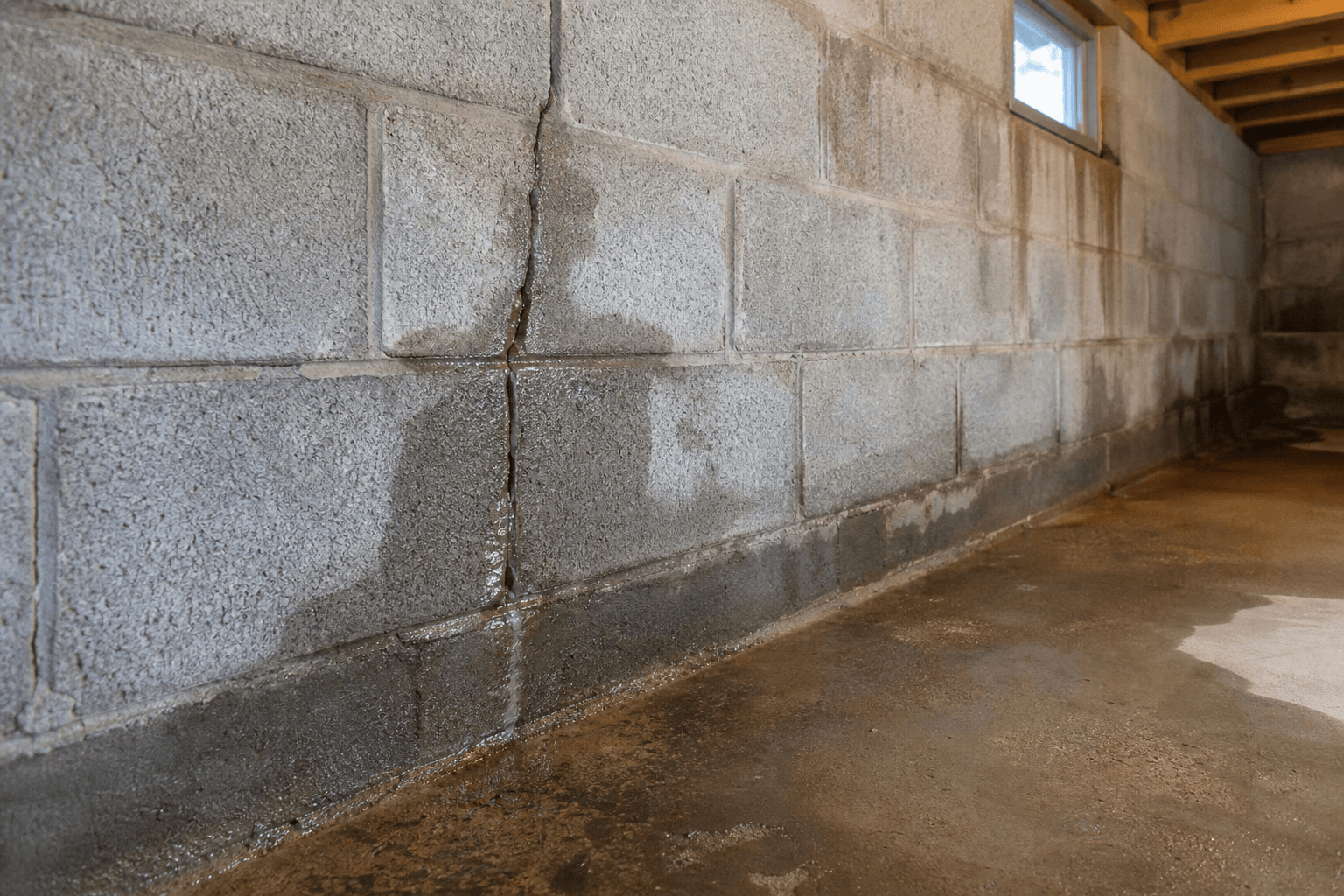
Water seeping through a basement foundation wall crack
For Durham homes, a repeat wall leak should be tied to the crack path, outside drainage, private drainage maintenance, and whether water returns after rain.

Local context

Durham drainage and waterproofing context

Durham should not be treated as a copied Raleigh page. It is part of the Triangle, but the most useful local guidance is about responsibility, drainage maintenance, and understanding whether water is coming from private drainage features, public drainage, a wet exterior wall, or an interior sump/drain system.

Durham's drainage and flooding information emphasizes keeping water moving through drainage systems as intended and keeping anything except stormwater out of drainage features. Lawn waste, debris, sediment, blocked pipes, and altered flow paths can contribute to flooding on private or neighboring property.

Durham's stormwater development review information notes that floodplain, stream buffers, stormwater quality and quantity, and development standards may apply to certain projects. A homeowner does not need to become a stormwater engineer, but exterior drainage changes should not be treated as casual yard work when local rules may apply.

For basement waterproofing estimates, Durham homeowners should ask whether the contractor is solving wall seepage, floor pressure, perimeter seepage, sump failure, exterior discharge, or a private drainage feature that requires maintenance or permit review.

How to think locally

City name is not enough: match the water path

Local waterproofing decisions work best when the inside symptom is matched to outside water conditions. The first wet point, storm timing, sump behavior, discharge route, downspout layout, grading, nearby hard surfaces, window wells, and finished materials all matter more than the city name by itself.

Local drainage rules are not the same as a basement repair quote. A waterproofing contractor may be able to install interior drains, sump systems, crack repair, exterior membranes, or discharge improvements, but city stormwater programs usually focus on public drainage systems, floodplain rules, right-of-way conditions, or development requirements. Homeowners should ask which part of the problem is private-property maintenance and which part involves public drainage or permits.

Before hiring, homeowners should verify any contractor's local office, service area, licensing, insurance, response time, completed work, and references. A strong estimate explains the water source, repair limits, drainage route, warranty conditions, and what is excluded from cleanup or restoration.

For finished basements, the local estimate conversation should include water control, cleanup boundaries, finished-wall access, flooring, sump backup, alarms, discharge location, and whether the basement should be tested through repeat rain before repairs are covered again.

Before an estimate, keep a simple rain log for at least one or two storms when possible. Note when rain started, when water appeared, where the first wet mark formed, whether the sump pump ran, where discharge flowed, and what changed outside the same wall. Photos taken before cleanup often make the estimate more accurate than a dry-basement walkthrough days later.
Homeowner scenarios

Common Durham waterproofing situations

Blocked private drainage feature

A Durham homeowner may see basement water after a ditch, swale, buried pipe, or yard inlet stops moving water as intended. Since the city identifies private-property drainage maintenance as the owner's responsibility, the estimate should separate foundation seepage from drainage maintenance before recommending a basement-only solution.

Water follows a crack after long rain

When a crack leaks during extended rain, the crack is the pathway but may not be the whole cause. The inspection should compare the crack location with exterior grade, downspouts, wall dampness, soil saturation, and nearby drainage features. Injection may help only if the surrounding water problem is also understood.

Home near a stream, buffer, or drainage easement

Exterior drainage work in Durham can become more sensitive near streams, protected buffers, easements, or floodplain areas. The quote should explain whether proposed discharge, grading, French drains, or buried lines need local review, and homeowners should avoid redirecting water in a way that blocks flow or affects another property.

Basement moisture behind finished walls

A Durham basement with paneling, drywall, or built-ins can hide the original leak point. The estimate should describe how the contractor will confirm moisture source, what limited removal may be needed, and whether waterproofing, drying, and restoration are separate parts of the project.

Common symptoms

Basement water problems to document in Durham

Wall seepage after storms

Water that follows a crack, block joint, pipe sleeve, or damp masonry area should be photographed before it spreads. The quote should connect wall repair, exterior drainage, or interior collection to that exact path.

Drainage blocked on private property

Durham guidance places maintenance responsibility for drainage systems on the property owner where they are located. Ditches, buried pipes, debris, and blocked flow can change how water reaches the foundation.

Water at the basement perimeter

A wet wall-floor joint may call for interior perimeter drainage and sump review, especially when the leak appears along more than one edge after rain.

Sump discharge problems

If pumped water exits near the foundation or into a poor drainage path, the system can recycle water back toward the basement. Ask where discharge ends and whether it complies with local and site conditions.

Finished-wall hidden moisture

Durham homes with finished basement areas need careful investigation because the first wet point may be hidden behind drywall, paneling, flooring, or insulation.

Floodplain or stream-buffer context

Not every basement repair touches floodplain or buffer rules, but exterior work near streams, drainage easements, or regulated areas deserves permit and local-rule questions before installation.

Inspection focus

What a Durham estimate should verify on site

Private drainage ownership

A Durham inspection should identify whether ditches, buried pipes, yard inlets, swales, or stream banks on the property are affecting the foundation. If a private drainage feature is blocked or altered, waterproofing alone may not stop water from returning.

Crack path versus wall pressure

A wet crack may need injection or exterior sealing, but the estimate should also check whether water pressure, clogged drainage, downspout discharge, or soil against the wall is feeding the same path after storms.

Discharge and local-rule questions

When a proposed system pumps or drains water outdoors, the inspection should note where that water will end, whether it crosses neighboring property, and whether floodplain, stream-buffer, easement, or drainage rules need review before installation.

Finished basement investigation

In Durham homes with finished lower levels, the quote should identify what needs to be opened for diagnosis. Hidden moisture behind drywall or flooring can make a small visible stain look simpler than the actual water path.

Services

Which waterproofing option may fit the pattern?

Interior basement waterproofing

Often fits water at the wall-floor joint, recurring perimeter seepage, or basement edges where water needs to be collected and routed to a sump basin. Ask how many linear feet are included, how wall water enters the drain, and what happens during power loss.

Exterior basement waterproofing

May fit wall-side water, failed exterior drainage, or a wall that needs source-side repair. Ask what will be excavated, how utilities and hardscapes are protected, what membrane or drainage board is included, and what surfaces are restored.

Basement drainage systems

Useful when water needs a controlled collection path. Interior drains, exterior footing drains, and French drains should be compared by location, depth, discharge, sump connection, maintenance, and restoration.

Sump pump installation

Important when water collects in a basin or an interior drainage system needs powered discharge. Ask about pump capacity, basin condition, check valve, alarm, battery backup, secondary pump, electrical needs, and discharge termination.

Basement crack repair

A good fit when water follows a specific crack or penetration and the wall is stable. Ask whether injection, exterior repair, or drainage correction is being recommended and whether structural movement is excluded.

Exterior water management

Gutters, downspouts, grading, window wells, patios, and discharge lines can add water to the foundation. NC State Extension guidance emphasizes keeping roof water moving away from foundation walls.

Costs and estimates

What can change a Durham waterproofing quote

Cost factors

  • Whether the issue is isolated wall seepage, perimeter seepage, sump failure, broad floor pressure, or drainage-maintenance related.
  • Interior drain length, concrete removal, dust control, finished-wall removal, sump connection, and floor patching.
  • Private drainage maintenance, blocked pipes, ditches, debris, yard grading, and how water moves across or away from the property.
  • Discharge routing, local drainage rules, stream buffers, floodplain context, drainage easements, and neighboring-property impact.
  • Sump basin age, pump quality, backup system, alarm, discharge line, and whether water reaches the basin.
  • Exterior excavation access, hardscape, landscaping, utilities, and restoration after membrane or footing-drain work.

Estimate questions

  • Is the problem wall seepage, perimeter water, floor seepage, sump failure, plumbing, or private drainage maintenance?
  • What outside feature lines up with the interior wet point?
  • Does the work change a drainage pipe, ditch, stream buffer, floodplain area, easement, or discharge path?
  • Who is responsible for checking permits or approvals if exterior drainage changes are included?
  • What parts of the finished basement must be opened, dried, removed, or restored?
  • What does the warranty exclude if water returns from a different area or if a private drainage feature blocks again?

Nearby areas

Nearby Durham areas and related searches

Chapel HillResearch Triangle ParkMorrisvilleCaryHillsboroughRougemontBahamaRaleigh

Estimate limits

Important limits before you compare contractors

Verify whether a contractor has a Durham office, local staff, a contractor network, and completed Durham projects before relying on those claims.
Durham stormwater and drainage ownership guidance does not replace a property-specific waterproofing estimate.
Exterior drainage changes may involve rules beyond basement waterproofing, especially near floodplains, streams, buffers, easements, or public drainage.
Electrical hazards, sewage, structural movement, and mold cleanup require the appropriate professional before ordinary waterproofing decisions.

Related pages

Useful next pages before requesting an estimate

FAQs

Durham basement waterproofing questions

Who maintains private drainage features in Durham?

Durham's drainage information states that the owner of the property where a drainage system is located is legally responsible for maintaining it, including ditches, stream banks, and buried pipes.

Can I change a drainage path to stop basement water?

Not casually. Durham warns that drainage systems may not be changed in ways that block free flow, disturb protected stream buffers, or violate applicable rules. Ask about approvals before exterior drainage work.

What is the best waterproofing method for a Durham basement?

It depends on the water path. Wall cracks, wall-floor joint seepage, sump issues, floor pressure, and private drainage problems can require different solutions or combinations.

Should a Durham estimate include sump discharge details?

Yes. Any drain or sump system should explain where collected water goes, whether it can return to the foundation, and whether the discharge path creates local or neighboring-property concerns.

Sources

Local and safety references

Local context was reviewed against public stormwater, drainage, safety, and moisture-control references. Use these sources for orientation, then confirm property-specific details with the relevant professional or local office.